I am getting this question a lot lately and it is really up to the individual. I started with one hive and if I did it over again I would have started with two. The sad thing is we paid as much for our one hive as I am charging for two. I was taken to the cleaners on that first hive.
Our first hive was supposed to be a full working hive already established. We expected honey that first year since it was suppose to be an established hive. It turned out to be a split and we received the split without the queen. I checked it after about 10 days like the beekeeper told me to. It looked healthy with lots of bees, but I didn't know what I was looking for. I had nothing to compare it to, so as I started to see a decrease in larva I was getting worried. I didn't know what an egg looked like and that is because we never had any eggs. I called the beekeeper that sold it to me and he told me to give it ten more days that the queen was probably a virgin queen and was mating and hadn't started to lay eggs. I checked it again ten days later. I didn't see any change other than now I had no larva and most of the brood had emerged. I called him and he told me he would come over the next week. 7 days later he came over and told me he didn't think I had a queen. We are now 5 weeks into this and no queen. I went and bought a queen and introduced her. Finally 6 weeks after purchasing the hive I had a laying queen. The population in the hive had dwindle and it was very small. I was frustrated to say the least.
I learned that if I had a second hive I could have compared the two and seen right off that something was wrong. I could have taken eggs from one hive and given it to the other to make a queen. I could have taken brood from the other hive and given it to the weak hive to boost its population. There were a number of things I could have done, but the biggest for me would have been having something to compare it too so that I could have identified a problem sooner.
I would start with at least two hives. It doesn't take a lot of extra time to care for one more hive. In my opinion once you get to about five hives it might be a little much to start with. You want to be able to enjoy it and not be overwhelmed your first year. I do know people who have started with five and it worked out okay, but the individual had quite a bit of time to work the bees. Here is a webinar that I thought was really good talking about having multiple hives called "2 1/2 hives by Larry Connor". This website has other good webinars too.
If you are just getting started learn from my mistakes and be a little cautious buying a completely established hive. We were late in the year so I went this route thinking I could trust this beekeeper. He sold it to us for $600. We decided to do it thinking we should get honey the first year from it. He suggested that I do two hives as well but then I would have been into it $1,200. Starting with a package or a nuc lets the beekeeper develop his knowledge at the same time the hive is building. Another problem with an established hive is you inherit the problems of the former beekeeper. I could never get that hive to build up to split or get honey. It ended up absconding on me. Anyway, if you choose to start with an established hive, don't pay as much as I did and make sure you trust the beekeeper if you are a beginner. You have to take their word on a lot of things.
Beekeeping is a great hobby and if you get started right, it makes it a whole lot more fun. We need more beekeepers and more people passionate about bees.
Happy Beekeeping.

Sunday, February 24, 2013


Monday, February 18, 2013
My Fears Became Reality
I finally had good enough weather to check my hives Saturday and today. Its been a pretty depressing weekend. Saturday I checked my hive and no bees. The hive had honey, but probably only 2 dozen dead bees laying on the bottom board. I am not sure what happened on that hive. I went on to check 11 more of my hives at another yard. Every single one was dead. Most of them were within inches of honey, but they appeared to have starved. I was heart broken. You get pretty attached to these hives. I grabbed all the frames with dead bees so that I can clean them up. What a job! Today I finished cleaning the frames and went to check my last three hives. The first one was dead. I felt like I was bound to find two more dead outs. I went to my last yard. The first hive had live bees. I about jumped 10 feet back in shock! The last hive was dead, so I took the honey and added it to the hive that was still alive since it was a little low. I also put a fresh pollen patty on part of the cluster so that they will hopefully start to build up. One out of fifteen hives made it. What a horrible record. All I can do is learn from it.
Here is what I think happened and what I need to change:
Happy Beekeeping!
Here is what I think happened and what I need to change:
- Hives need more sun. Most of my hives get great summer sun, but winter they get more shade than I would like. I may need to move my hives to get full sun during the winter months.
- More ventilation. Some of the hives seemed to have sweat on the honey. I think I need to either have a top entrance for ventilation or drill holes in my hive boxes. I really don't want to put holes in my boxes, so I think I will go down the route of creating a top entrance to allow ventilation.
- Healthier bees in the fall. I fed my bees a protein patty in the fall, but I have realized not all protein patties are created equal. I must say I was very disappointed with the ones I had bought last year. The bees just wouldn't take it. I also think it was such a dry year that the nectar and pollen was just insufficient. I had skinny bees even though they had food, it was most likely from only a couple sources of plants that still managed to produce a little nectar and pollen even though it was such a dry year. Here is a great article that talks about needing fat bees. It is a little technical, but I found it interesting: http://scientificbeekeeping.com/bee-nutrition/
- I may need to figure out a way to insulate my hives a little better. On the other hand, I have to be careful the hives have good ventilation.
Happy Beekeeping!
Thursday, February 14, 2013
Tough Winter for the Bees
It has been a really tough year for the bees. We had an extremely dry summer limiting the pollen and nectar available and many of the hives struggled to build up. Then on top of a tough summer we have the coldest January since the 1940's here in Utah. I am afraid I have lost most of my hives this year. It makes me just sick thinking about it.
I was talking with a commercial beekeeper to day that I get all of my bees from and he said most people around us are losing more than 50% of there hives this winter. I had a lot of new hives started last year and I think that is why I am seeing an even a higher degree of loss. I am still keeping my fingers crossed that some of them are alive, but there sure isn't a lot of activity. One of the biggest problems we had was the fact that we would have a couple weeks straight of temperatures with highs only in the 20s. The bees are not able to move to other food stores at these temperatures.
I am sure hoping for a little miracle and as things warm up I start seeing my bees again.
Good luck everyone. I hope things are looking better for your hives.
Happy Beekeeping!
I was talking with a commercial beekeeper to day that I get all of my bees from and he said most people around us are losing more than 50% of there hives this winter. I had a lot of new hives started last year and I think that is why I am seeing an even a higher degree of loss. I am still keeping my fingers crossed that some of them are alive, but there sure isn't a lot of activity. One of the biggest problems we had was the fact that we would have a couple weeks straight of temperatures with highs only in the 20s. The bees are not able to move to other food stores at these temperatures.
I am sure hoping for a little miracle and as things warm up I start seeing my bees again.
Good luck everyone. I hope things are looking better for your hives.
Happy Beekeeping!
Monday, February 11, 2013
Medium Boxes vs. Deep Boxes
Each year I get a lot of people asking me why I only sell medium boxes. I thought I would explain a little here on the blog. Traditional hives typically have 2 deep boxes which are 9 5/8 inches deep and theses are called the brood boxes. This is where the queen will do most of the laying of eggs and the rearing of bees. Then most people would add honey supers or medium boxes 6 5/8 inches deep. Average hives in Utah will typically fill two of them if we have a good honey year and maybe even more. Most people will harvest the honey supers and leave the bottom two boxes for the bees. The Queen will slow down the rearing of brood and they will start to back fill it with honey in the fall.
Another train of thought that is becoming more and more popular is to have one size of equipment (all deeps or all mediums). That way all the frames are interchangeable. This also eliminates 99% of the need for a queen excluder. The 1% is for other reason besides keeping the queen out of the honey suppers. You will often hear this method of beekeeping as unlimited brood rearing. You let the queen rear as much brood as she can and you keep adding boxes to give them room for honey. In the end you can manipulate the hive so the brood is in the bottom and the honey is in the top. The theory behind it is it doesn't hinder the bees from storing honey or raising brood. Queen excluders can slow down the bees progress since they have to get through the screen. Some times they wont move up through it unless the comb is drawn out and sometimes they even need honey or brood above it so that it encourages them to get through it. This in my opinion is a clear indication they don't want an excluder in there. I am only discussing deeps and mediums because the shallow supper at 5 11/16 just doesn't seem quite big enough. In most places in Utah you will most likely need to over winter the bees in either 2 deeps or 3 mediums.
Pros and Cons of Deeps
Happy beekeeping!
Another train of thought that is becoming more and more popular is to have one size of equipment (all deeps or all mediums). That way all the frames are interchangeable. This also eliminates 99% of the need for a queen excluder. The 1% is for other reason besides keeping the queen out of the honey suppers. You will often hear this method of beekeeping as unlimited brood rearing. You let the queen rear as much brood as she can and you keep adding boxes to give them room for honey. In the end you can manipulate the hive so the brood is in the bottom and the honey is in the top. The theory behind it is it doesn't hinder the bees from storing honey or raising brood. Queen excluders can slow down the bees progress since they have to get through the screen. Some times they wont move up through it unless the comb is drawn out and sometimes they even need honey or brood above it so that it encourages them to get through it. This in my opinion is a clear indication they don't want an excluder in there. I am only discussing deeps and mediums because the shallow supper at 5 11/16 just doesn't seem quite big enough. In most places in Utah you will most likely need to over winter the bees in either 2 deeps or 3 mediums.
Pros and Cons of Deeps
- Pro - you need less boxes (less equipment and less money)
- Pro - most nucleus hives for sale are deeps
- Cons - they get HEAVY (deeps can weigh 100 lbs full of honey). When you have to move the box during an observation you not only have to lift the 100 lbs but you then have to pry the boxes apart thanks to propolis.
- Cons - due to the weight of the honey on the frame, I have had more top bars break away from the side bars because they cannot handle the weight.
- Cons - often the bees will be slower to move into a deep box with new foundation because they have a lot more area to manage in order to regulate the temperature in the spring.
- Pro - easier to handle because they weigh less ( mediums can weigh up to 60 lbs full of honey)
- Pro - frames seem to last longer. They don't have as much weight pulling down on the side bars
- Pro - bees seem to expand into medium boxes quicker
- Pro - equipment seems to last longer
- Cons - It requires more boxes (more cost)
- Cons - It may require more frames to observe if you are trying to find the queen.
Happy beekeeping!
Sunday, January 13, 2013
2013 Hives for Sale
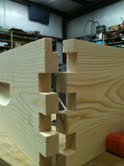
I am going to be selling hives again this year. We have a limited number of hives this year, so let me know early so we can make sure we have what you need and get you set up right. I only sell what is called a medium box. These boxes are 6 5/8 inches tall. I have deep boxes (9 5/8 inches) in my operation, but for hobbyist it is best to have all the same size boxes. I am actually moving away from my deep boxes and try to avoid using them. I prefer mediums compared to deeps for a number of reason. The biggest reason is working with the weight. A full deep can be around 100 lbs. A medium typically is about 50-60 lbs. This is pretty heavy considering the bees will use propolis to glue them together. In my experience the bees expand into a medium more readily than a deep box. I have also found the frames tend to last longer because they aren't holding the weight that the deep frames do. The kits I am sell will include 5 medium boxes assembled with water resistant glue and 16 gauge staples. These boxes are built to last. The corners are box jointed and the top joint is modified to be 1 5/8 inches vs 3/4 inches. The top joint is the weakest joint because of the rabbit cut for the frame rest. By making it 1 5/8 inches it now has added strength and shouldn't blow out as easy. This is an unique box that only one company makes as far as I know. It is made in the USA out of ponderosa pine.

The frames are made in the USA as well and so is the foundation. The foundation is black plastic and coated with real bees wax. This is the best combination of frame and foundation that I have found. The bees seem to adopt it better than anything else I have used.
The tops this year are a migratory top or a California top. I have used both the telescopic cover and the California tops and I am converting to the California top as it is just easier to work with. You can also create a top entrance if you would like. It just seem a lot more versatile and you don't need an inner cover with it.
The bottoms are a solid reversable bottom. One side leaves a bee opening of 3/4 inch and the other side is 3/8 inch. The 3/8 inch is a good size for the winter and the 3/4 works good in the summer. These also come with an entrance reducer.
The kit also comes with a division feeder. This is a plastic feeder that replaces two frames and has a cap and ladder cover so you don't have as many bees drown. These feeders work really well and you can use them over and over.
 Finally the kit comes with a 3lb package of bees. This is approximately 9,000 bees and one queen. You can choose from either a Carniolan queen or Cordovan Italian queen. Both breeds work really well in Utah. Here is a link to a prior post that explains the different breeds. These packages come from Koehnen & Sons in California and are good quality packages.
 All of this for only $275. We will give you an introductory class when you pick up the bees and be a coach an mentor along the way. If you want two or more, we will offer a discount. The equipment comes unpainted. If you would like it stained it will be an additional $30.
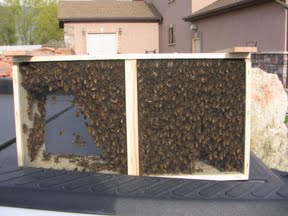
Starter hives will be the same as above, but will only have 3 boxes instead of 5 and will be $215.
If you want hive components or bees here are the following prices:
Medium hive boxes (assembled with frames and foundation) - $35/box
Heavy duty California top - $12
Reversible bottom w/ entrance reducer - $12
Division feeder for 6 5/8 box - $10
3lb package of bees $82
Let me know if you have any questions. I would love to help you get started. 801-796-2114
Happy Beekeeping
The frames are made in the USA as well and so is the foundation. The foundation is black plastic and coated with real bees wax. This is the best combination of frame and foundation that I have found. The bees seem to adopt it better than anything else I have used.
The tops this year are a migratory top or a California top. I have used both the telescopic cover and the California tops and I am converting to the California top as it is just easier to work with. You can also create a top entrance if you would like. It just seem a lot more versatile and you don't need an inner cover with it.
The bottoms are a solid reversable bottom. One side leaves a bee opening of 3/4 inch and the other side is 3/8 inch. The 3/8 inch is a good size for the winter and the 3/4 works good in the summer. These also come with an entrance reducer.
The kit also comes with a division feeder. This is a plastic feeder that replaces two frames and has a cap and ladder cover so you don't have as many bees drown. These feeders work really well and you can use them over and over.

Starter hives will be the same as above, but will only have 3 boxes instead of 5 and will be $215.
If you want hive components or bees here are the following prices:
Medium hive boxes (assembled with frames and foundation) - $35/box
Heavy duty California top - $12
Reversible bottom w/ entrance reducer - $12
Division feeder for 6 5/8 box - $10
3lb package of bees $82
Let me know if you have any questions. I would love to help you get started. 801-796-2114
Happy Beekeeping
Tuesday, January 8, 2013
Goals for 2013
I have thought a lot about this and there are so many things I want to try, but so little time to do it. After such a bad year for honey last year, I would like to really focus on honey production. We had 15 hives going into winter and many of them were pretty light. I would like to stay at about 15 hives, but really focus on building them up in the spring. If I have any that don't make it through the winter, I will replace them with packages. I will try not to split any hives in the spring unless they start to prepare to swarm. I will try to feed them pollen substitute to get them to build. I don't think I will feed them sugar water, even though most people recommend feeding the pollen with the sugar water. I am hoping they have enough honey and wont need the sugar water. I will pay close attention to the mite counts. Hopefully through these efforts I can have healthy bees going into the nectar flows. I am also hoping this year we wont have as dry of a year. I think that is what really killed me last year.
The second thing I would like to do is sell hives again this year. We had a lot of fun doing it last year. I found even better quality equipment and I think we can get people set up right. I didn't have a very good experience buying our first hive, so my goal is to make sure people feel like they are ready for bees and have someone that they can trust gave them the best shot at being successful. Goal is to sell 25 hives this year.
The third thing I would like to try is to over winter nucleus hives. It always seems like you have a couple of week hives in the bunch. I am thinking of splitting them up the end of June or first of July and getting them built up enough to get through winter. We will see how it goes. Winter is the most stressful time for me, because you cannot check you bees. You just hope they will make it through, so if I had some nucs make it I can cover any of my hive losses.
If I can do these things 2013 should be a great year. Happy beekeeping!
The second thing I would like to do is sell hives again this year. We had a lot of fun doing it last year. I found even better quality equipment and I think we can get people set up right. I didn't have a very good experience buying our first hive, so my goal is to make sure people feel like they are ready for bees and have someone that they can trust gave them the best shot at being successful. Goal is to sell 25 hives this year.
The third thing I would like to try is to over winter nucleus hives. It always seems like you have a couple of week hives in the bunch. I am thinking of splitting them up the end of June or first of July and getting them built up enough to get through winter. We will see how it goes. Winter is the most stressful time for me, because you cannot check you bees. You just hope they will make it through, so if I had some nucs make it I can cover any of my hive losses.
If I can do these things 2013 should be a great year. Happy beekeeping!
 |
| Cordovan Queen (one of my favorite breeds of queens) |
Thursday, January 3, 2013
2012 In Review
2012 was a great year for me, but not so much for the
bees. I first apologize for not keeping
the blog up as well as I should. My wife
had our third child and that made life crazy for us. I hope to do a lot better job this year.
It was a fun year, but tough one on the bees. I am anxious to see if we can get all 15 hives through the winter.
As I said it was a tough year for the bees. It was so dry that we really didn’t see any nectar
flows. We started about 5 nucs (small 5
frame hives) this year and put New World Carnolian queens in them. I was really excited to try these queens. One
trait of this breed is that it will slow down the brood rearing when there isn’t
nectar flows. Well unfortunately they
were all really slow to build up because we didn’t have any nectar flows. This is supposed to be a good trait to help
them get through the winter on less honey stores, but on such a dry summer I am
hoping they will have enough to get through the winter.
Honey production overall was a dismal. We got about 80 lbs off of 15 hives. I probably was a little aggressive in taking
the honey too, thinking they may have a fall flow. They didn’t, so we went into winter pretty lean.
Firsts for 2012:
·
Built from scratch 30 hives (I am not sure it is
worth doing from scratch)
·
Helped 10 people get started with beehives
·
Found 2 queens working in a hive
·
Saw a queen lay an egg while I was observing the
hive
·
Had to deal with mold in a hive
·
Purchased an extractor
·
Used a heat gun to remove the cappings
It was a fun year, but tough one on the bees. I am anxious to see if we can get all 15 hives through the winter.
Subscribe to:
Posts (Atom)