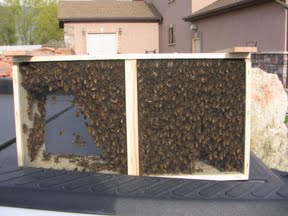
I am going to be selling hives again this year. We have a limited number of hives this year, so let me know early so we can make sure we have what you need and get you set up right. I only sell what is called a medium box. These boxes are 6 5/8 inches tall. I have deep boxes (9 5/8 inches) in my operation, but for hobbyist it is best to have all the same size boxes. I am actually moving away from my deep boxes and try to avoid using them. I prefer mediums compared to deeps for a number of reason. The biggest reason is working with the weight. A full deep can be around 100 lbs. A medium typically is about 50-60 lbs. This is pretty heavy considering the bees will use propolis to glue them together. In my experience the bees expand into a medium more readily than a deep box. I have also found the frames tend to last longer because they aren't holding the weight that the deep frames do. The kits I am sell will include 5 medium boxes assembled with water resistant glue and 16 gauge staples. These boxes are built to last. The corners are box jointed and the top joint is modified to be 1 5/8 inches vs 3/4 inches. The top joint is the weakest joint because of the rabbit cut for the frame rest. By making it 1 5/8 inches it now has added strength and shouldn't blow out as easy. This is an unique box that only one company makes as far as I know. It is made in the USA out of ponderosa pine.
The frames are made in the USA as well and so is the foundation. The foundation is black plastic and coated with real bees wax. This is the best combination of frame and foundation that I have found. The bees seem to adopt it better than anything else I have used.
The tops this year are a telescopic cover with an inner cover. I went away from them for a year, but the migratory covers just don't hold up as well. They end up warping and then you have more entrances or exits than you ever imagined. I also think cosmetically the telescopic covers are better too. They do add a little more expense to the hives, but I think it is worth the extra expense.
The bottoms are a solid reversable bottom. One side leaves a bee opening of 3/4 inch and the other side is 3/8 inch. The 3/8 inch is a good size for the winter and the 3/4 works good in the summer. These also come with an entrance reducer.
The kit also comes with a division feeder. This is a plastic feeder that replaces two frames and has a cap and ladder cover so you don't have as many bees drown. These feeders work really well and you can use them over and over.
Finally the kit comes with a 3lb package of bees. This is approximately 9,000 bees and one queen. You can choose from either a Carniolan queen or Cordovan Italian queen. Both breeds work really well in Utah. Here is a link to a prior post that explains the different breeds. These packages come from Koehnen & Sons in California and are good quality packages.
All of this for only $325. We will give you an introductory class when you pick up the bees and be a coach and a mentor along the way. If you want two or more, we will offer a discount. The equipment comes unpainted.
If you want hive components or bees here are the following prices:
Medium hive boxes (assembled with frames and foundation) - $40/box
Heavy Duty Telescopic Top and Heavy Duty Inner Cover - $30
Reversible bottom w/ entrance reducer - $15
Division feeder for 6 5/8 box - $10
3lb package of bees $90 (includes a $5 dollar deposit on the cage)
Let me know if you have any questions. I would love to help you get started. 801-796-2114
Happy Beekeeping
Thursday, December 26, 2013
Thursday, April 25, 2013
The Bees Have Arrived
The bees have made it. Sorry everyone they are a week late, but hope the queens are good and it was worth the wait. The bees look to be in good shape. It always makes me nervous after they have traveled a couple days from CA. You will see a few dead bees at the bottom of the package, but it is nice to see them clustered up. This indicates they aren't too warm and they are getting to know each other really good. This also is a good sign because the queen is in the middle of the cluster.
These bees were put into the package on Monday or Tuesday and we will want to make sure they have been together at least 48 hours before installing them. We will install most of our hives tonight. Most everyone will come and pick them up on Saturday, but I have a few that have asked to come sooner. Saturday will probably be about perfect. they will have been together about 4 days and ready to get out and start a new hive. Here are a few other pictures of the 70 packages we have.
Let the fun begin! Happy Beekeeping.
These bees were put into the package on Monday or Tuesday and we will want to make sure they have been together at least 48 hours before installing them. We will install most of our hives tonight. Most everyone will come and pick them up on Saturday, but I have a few that have asked to come sooner. Saturday will probably be about perfect. they will have been together about 4 days and ready to get out and start a new hive. Here are a few other pictures of the 70 packages we have.
Let the fun begin! Happy Beekeeping.
Thursday, April 11, 2013
The Bees Are Coming! The Bees Are Coming!
We are just over a week away from getting all the bees. They should be here next Friday. We have 70 3lb packages coming. It is going to be a lot of bees. I can't wait. We will keep 14 packages for my own yards and the rest will be for people either starting beekeeping or there are a few that are having to recover from their winter losses like I am.
Should be a fun day next Saturday April 20th. Those that just want to pick up the bees can do so between 9-10 a.m. and those wanting to attend a beginner beekeeping class can come at 10 a.m. and it will go probably until 12. We will show you how to install the bees. Walk you through your first few months of beekeeping and give you a handout to help you remember everything.
It will be so nice to have bees again. Right now the fruit trees are starting to bloom and I don't have any bees. Its killing me.
Swarm season is right around the corner. If you see a swarm, please don't call a pest control company. Call a beekeeper and let them come and relocate the honey bees. You can call me if you are in Utah County (801) 796-2114 and I will come and get them (no charge). Please make sure they are honey bees. If you let a beekeeper know as soon as you see them in a cluster, it is a lot easier to relocate them at that point. If they get established somewhere it is a lot harder and most people will charge you to come and remove them.
Spring is a great time a year! Everything starts coming to life.
Happy Beekeeping.
Should be a fun day next Saturday April 20th. Those that just want to pick up the bees can do so between 9-10 a.m. and those wanting to attend a beginner beekeeping class can come at 10 a.m. and it will go probably until 12. We will show you how to install the bees. Walk you through your first few months of beekeeping and give you a handout to help you remember everything.
It will be so nice to have bees again. Right now the fruit trees are starting to bloom and I don't have any bees. Its killing me.
Swarm season is right around the corner. If you see a swarm, please don't call a pest control company. Call a beekeeper and let them come and relocate the honey bees. You can call me if you are in Utah County (801) 796-2114 and I will come and get them (no charge). Please make sure they are honey bees. If you let a beekeeper know as soon as you see them in a cluster, it is a lot easier to relocate them at that point. If they get established somewhere it is a lot harder and most people will charge you to come and remove them.
Spring is a great time a year! Everything starts coming to life.
Happy Beekeeping.
Tuesday, March 12, 2013
Keeping Bees in Utah
Over the weekend, Utah Beekeepers Association had their annual meeting. I was not able to attend, but I am hearing rumblings that many of the large commercial beekeepers and the state want to make it more difficult to keep bees in Utah. This is a travesty. We need more beekeepers not less. We do need people who are interested in learning and improving beekeeping methods though.
Here is my take:
First I am not very politically active. I should be, but it hasn't made my priority list yet. I don't like government managing everything. This includes managing beekeeping. I do recommend everyone abide by the current regulations. Each person in Utah that keeps bees needs to have a license. Currently they are pretty cheap. For a hobbyist with less than 20 hives it is $10/year. This is mainly to register your hives. Here is a link to the Utah Beekeeping License Application. The next thing I recommend is that beekeepers try to educate themselves as much as possible. As a hobbyist we are able to do more for our bees naturally to help them over come some of the current issues than large commercial beekeepers. Both types of beekeepers are crucial to making sure we have healthy honey bees.
Commercial beekeepers are in a tough spot. Their lively hood depends on their bees. They typically transport their bees from state to state for pollination. This brings back to Utah all kinds of things. One example is we currently don't have too many problems with the hive beetle, but it wont be long. These Commercial beekeepers typically don't have time to try natural methods, so they treat their hives both for problems and as a precaution. In my opinion this isn't the best thing for bees, but I understand why they do it. With out this type of beekeeper, the hobbyist would have a difficult time having access to bees and supplies.
Hobbyist beekeepers are generally able to try different techniques to help the bees without over medicating them. Many proven methods are out there. They take more time and probably are not economical for commercial beekeepers. As hobbyist though I feel we do need to take responsibility to learn the different deceases and pest that affect our bees. This is obviously something you have to progress at, but I do think we need to be proactive with it.
I really hope the landscape of beekeeping in Utah doesn't change for the worse. I realize I need to do a better job of getting involved with the different beekeeping associations and supporting them as well as educating myself. It does take time and is hard to justify sometimes, but I need to try harder to get involved. I love beekeeping. It helps my gardens, it gives me fresh pure honey, and the bees are fascinating. I also enjoy helping others get started. Its important to me to do my part to help keep the barriers to entry low for beekeepers.
Here are a couple of links to the local and state beekeeping associations. Check them out, some have some really good information:
Utah County Beekeepers Association
Wasatch Beekeepers Association
Utah Beekeepers Association
Happy Beekeeping!
Here is my take:
First I am not very politically active. I should be, but it hasn't made my priority list yet. I don't like government managing everything. This includes managing beekeeping. I do recommend everyone abide by the current regulations. Each person in Utah that keeps bees needs to have a license. Currently they are pretty cheap. For a hobbyist with less than 20 hives it is $10/year. This is mainly to register your hives. Here is a link to the Utah Beekeeping License Application. The next thing I recommend is that beekeepers try to educate themselves as much as possible. As a hobbyist we are able to do more for our bees naturally to help them over come some of the current issues than large commercial beekeepers. Both types of beekeepers are crucial to making sure we have healthy honey bees.
Commercial beekeepers are in a tough spot. Their lively hood depends on their bees. They typically transport their bees from state to state for pollination. This brings back to Utah all kinds of things. One example is we currently don't have too many problems with the hive beetle, but it wont be long. These Commercial beekeepers typically don't have time to try natural methods, so they treat their hives both for problems and as a precaution. In my opinion this isn't the best thing for bees, but I understand why they do it. With out this type of beekeeper, the hobbyist would have a difficult time having access to bees and supplies.
Hobbyist beekeepers are generally able to try different techniques to help the bees without over medicating them. Many proven methods are out there. They take more time and probably are not economical for commercial beekeepers. As hobbyist though I feel we do need to take responsibility to learn the different deceases and pest that affect our bees. This is obviously something you have to progress at, but I do think we need to be proactive with it.
I really hope the landscape of beekeeping in Utah doesn't change for the worse. I realize I need to do a better job of getting involved with the different beekeeping associations and supporting them as well as educating myself. It does take time and is hard to justify sometimes, but I need to try harder to get involved. I love beekeeping. It helps my gardens, it gives me fresh pure honey, and the bees are fascinating. I also enjoy helping others get started. Its important to me to do my part to help keep the barriers to entry low for beekeepers.
Here are a couple of links to the local and state beekeeping associations. Check them out, some have some really good information:
Utah County Beekeepers Association
Wasatch Beekeepers Association
Utah Beekeepers Association
Happy Beekeeping!
Sunday, March 3, 2013
Yesterday's Success
I went over and helped my neighbor check his hives. He bought two hives from me last year and is still learning the ropes. He had one hive that struggle getting going and I think the original queen wasn't mated very well. We found two queens in the hive and I think the hive created a new queen because they weren't happy with the original queen. We split the hive up and watched to see which queen was the most prodcutive. We found out which one it was and combined the hive back together again. It was interesting because the original queen didn't really lay eggs once we split the queens up. She started well, but then I think she just stopped. My theory is she wasn't mated well and decided to stop laying. Once we combined the hives, it was still pretty far behind and really didn't get a chance to build up much before winter. I didn't have much hope for this hive. His other hive has been strong from day one. He called me and said I think both hives made it through the winter, can you come and see what you think. I went over and sure enough both hives were flying and active as could be. They loved the sunny day yesterday. We opened up the week hive and it had a few frames with bees. The hive was pretty light so we put a pollen patty on it and he was going to start feeding it. The strong hive is very strong. The whole top box had bees and it was very active. The hive is very heavy with honey and so we put pollen patties on it and closed it up. It was so good to see a little success.
These two hives were on the South side of his house and received the reflection of the sun off the siding. I think it helped keep it warmer. These hives also had really good ventilation. I am convinced that one of the main problems with my hives this year was a lack of ventilation and a lack of sun exposure. I wish I would have taken pictures. It was so nice to see active hives again.
Happy Beekeeping
These two hives were on the South side of his house and received the reflection of the sun off the siding. I think it helped keep it warmer. These hives also had really good ventilation. I am convinced that one of the main problems with my hives this year was a lack of ventilation and a lack of sun exposure. I wish I would have taken pictures. It was so nice to see active hives again.
Happy Beekeeping
Friday, March 1, 2013
Mentoring
I had a good experience yesterday. I went and visited a beekeeper that supplies me with all of my packages that I include with my hives that I sell. I had to pay him for the 65 packages that I ordered (wow! what a check). I have worked with this guy for a couple of years and he is one of the nicest beekeepers I have met. He has been keeping bees for over 40 years and currently runs about 700 hives. He has so much knowledge and is so good about letting me ask questions. One day I would really like to shadow him for a day and absorb everything I could. We talked for about an hour about everything from what type of foundation he likes to use to how to get a strong spring build up. He gave me some encouraging words to build up my confidence after such a horrific winter and sent me on my way excited and motivated to be a beekeeper.
I think I have mentioned on this blog before, that my experience is, a lot of beekeepers are very territorial and protective of their knowledge. It was so refreshing to find someone that was willing to take the time to make you want to be involved in beekeeping. Rex has always been good to help me and yesterday was no different.
We need more beekeepers. It is good for the individual, community, and the progression of beekeeping and honey bees themselves. My goal as a beekeepers is to get others excited about keeping bees. I didn't get into bees to make money (thank goodness since I may never make any He He), but I did get into it because I love honey and I love my garden and bees help me with both. The more I learn the more I understand just how important bees are to each of us. I have learned so much in my four years of beekeeping. I cannot wait to share it and start another season her soon.
This weekend should be warming up a little for us on the Wasatch Front. Take a few minutes and make sure you check on your hives. If they are alive, make sure they have food and are in good shape to make it until there is natural pollen and nectar. You may consider putting on a pollen patty to help them start rearing brood. If you do, you have to put it almost right on the cluster. I typically cover half the cluster with it and leave the other half so they can move around. If they don't have honey, I would feed them sugar water if you do it by weight you will want to go 2 parts water 1 part sugar. If you start to feed either syrup or pollen, you will need to continue until there is a natural supply available. It is worth it to feed them to make sure they make it through (trust me). FYI, it might give you a little something I like to call Bee Fever. Once you get it, spring can't come fast enough.
Happy Beekeeping.
I think I have mentioned on this blog before, that my experience is, a lot of beekeepers are very territorial and protective of their knowledge. It was so refreshing to find someone that was willing to take the time to make you want to be involved in beekeeping. Rex has always been good to help me and yesterday was no different.
We need more beekeepers. It is good for the individual, community, and the progression of beekeeping and honey bees themselves. My goal as a beekeepers is to get others excited about keeping bees. I didn't get into bees to make money (thank goodness since I may never make any He He), but I did get into it because I love honey and I love my garden and bees help me with both. The more I learn the more I understand just how important bees are to each of us. I have learned so much in my four years of beekeeping. I cannot wait to share it and start another season her soon.
This weekend should be warming up a little for us on the Wasatch Front. Take a few minutes and make sure you check on your hives. If they are alive, make sure they have food and are in good shape to make it until there is natural pollen and nectar. You may consider putting on a pollen patty to help them start rearing brood. If you do, you have to put it almost right on the cluster. I typically cover half the cluster with it and leave the other half so they can move around. If they don't have honey, I would feed them sugar water if you do it by weight you will want to go 2 parts water 1 part sugar. If you start to feed either syrup or pollen, you will need to continue until there is a natural supply available. It is worth it to feed them to make sure they make it through (trust me). FYI, it might give you a little something I like to call Bee Fever. Once you get it, spring can't come fast enough.
Happy Beekeeping.
Sunday, February 24, 2013
How Many Hives Should I Start With?
I am getting this question a lot lately and it is really up to the individual. I started with one hive and if I did it over again I would have started with two. The sad thing is we paid as much for our one hive as I am charging for two. I was taken to the cleaners on that first hive.
Our first hive was supposed to be a full working hive already established. We expected honey that first year since it was suppose to be an established hive. It turned out to be a split and we received the split without the queen. I checked it after about 10 days like the beekeeper told me to. It looked healthy with lots of bees, but I didn't know what I was looking for. I had nothing to compare it to, so as I started to see a decrease in larva I was getting worried. I didn't know what an egg looked like and that is because we never had any eggs. I called the beekeeper that sold it to me and he told me to give it ten more days that the queen was probably a virgin queen and was mating and hadn't started to lay eggs. I checked it again ten days later. I didn't see any change other than now I had no larva and most of the brood had emerged. I called him and he told me he would come over the next week. 7 days later he came over and told me he didn't think I had a queen. We are now 5 weeks into this and no queen. I went and bought a queen and introduced her. Finally 6 weeks after purchasing the hive I had a laying queen. The population in the hive had dwindle and it was very small. I was frustrated to say the least.
I learned that if I had a second hive I could have compared the two and seen right off that something was wrong. I could have taken eggs from one hive and given it to the other to make a queen. I could have taken brood from the other hive and given it to the weak hive to boost its population. There were a number of things I could have done, but the biggest for me would have been having something to compare it too so that I could have identified a problem sooner.
I would start with at least two hives. It doesn't take a lot of extra time to care for one more hive. In my opinion once you get to about five hives it might be a little much to start with. You want to be able to enjoy it and not be overwhelmed your first year. I do know people who have started with five and it worked out okay, but the individual had quite a bit of time to work the bees. Here is a webinar that I thought was really good talking about having multiple hives called "2 1/2 hives by Larry Connor". This website has other good webinars too.
If you are just getting started learn from my mistakes and be a little cautious buying a completely established hive. We were late in the year so I went this route thinking I could trust this beekeeper. He sold it to us for $600. We decided to do it thinking we should get honey the first year from it. He suggested that I do two hives as well but then I would have been into it $1,200. Starting with a package or a nuc lets the beekeeper develop his knowledge at the same time the hive is building. Another problem with an established hive is you inherit the problems of the former beekeeper. I could never get that hive to build up to split or get honey. It ended up absconding on me. Anyway, if you choose to start with an established hive, don't pay as much as I did and make sure you trust the beekeeper if you are a beginner. You have to take their word on a lot of things.
Beekeeping is a great hobby and if you get started right, it makes it a whole lot more fun. We need more beekeepers and more people passionate about bees.
Happy Beekeeping.
Our first hive was supposed to be a full working hive already established. We expected honey that first year since it was suppose to be an established hive. It turned out to be a split and we received the split without the queen. I checked it after about 10 days like the beekeeper told me to. It looked healthy with lots of bees, but I didn't know what I was looking for. I had nothing to compare it to, so as I started to see a decrease in larva I was getting worried. I didn't know what an egg looked like and that is because we never had any eggs. I called the beekeeper that sold it to me and he told me to give it ten more days that the queen was probably a virgin queen and was mating and hadn't started to lay eggs. I checked it again ten days later. I didn't see any change other than now I had no larva and most of the brood had emerged. I called him and he told me he would come over the next week. 7 days later he came over and told me he didn't think I had a queen. We are now 5 weeks into this and no queen. I went and bought a queen and introduced her. Finally 6 weeks after purchasing the hive I had a laying queen. The population in the hive had dwindle and it was very small. I was frustrated to say the least.
I learned that if I had a second hive I could have compared the two and seen right off that something was wrong. I could have taken eggs from one hive and given it to the other to make a queen. I could have taken brood from the other hive and given it to the weak hive to boost its population. There were a number of things I could have done, but the biggest for me would have been having something to compare it too so that I could have identified a problem sooner.
I would start with at least two hives. It doesn't take a lot of extra time to care for one more hive. In my opinion once you get to about five hives it might be a little much to start with. You want to be able to enjoy it and not be overwhelmed your first year. I do know people who have started with five and it worked out okay, but the individual had quite a bit of time to work the bees. Here is a webinar that I thought was really good talking about having multiple hives called "2 1/2 hives by Larry Connor". This website has other good webinars too.
If you are just getting started learn from my mistakes and be a little cautious buying a completely established hive. We were late in the year so I went this route thinking I could trust this beekeeper. He sold it to us for $600. We decided to do it thinking we should get honey the first year from it. He suggested that I do two hives as well but then I would have been into it $1,200. Starting with a package or a nuc lets the beekeeper develop his knowledge at the same time the hive is building. Another problem with an established hive is you inherit the problems of the former beekeeper. I could never get that hive to build up to split or get honey. It ended up absconding on me. Anyway, if you choose to start with an established hive, don't pay as much as I did and make sure you trust the beekeeper if you are a beginner. You have to take their word on a lot of things.
Beekeeping is a great hobby and if you get started right, it makes it a whole lot more fun. We need more beekeepers and more people passionate about bees.
Happy Beekeeping.
Monday, February 18, 2013
My Fears Became Reality
I finally had good enough weather to check my hives Saturday and today. Its been a pretty depressing weekend. Saturday I checked my hive and no bees. The hive had honey, but probably only 2 dozen dead bees laying on the bottom board. I am not sure what happened on that hive. I went on to check 11 more of my hives at another yard. Every single one was dead. Most of them were within inches of honey, but they appeared to have starved. I was heart broken. You get pretty attached to these hives. I grabbed all the frames with dead bees so that I can clean them up. What a job! Today I finished cleaning the frames and went to check my last three hives. The first one was dead. I felt like I was bound to find two more dead outs. I went to my last yard. The first hive had live bees. I about jumped 10 feet back in shock! The last hive was dead, so I took the honey and added it to the hive that was still alive since it was a little low. I also put a fresh pollen patty on part of the cluster so that they will hopefully start to build up. One out of fifteen hives made it. What a horrible record. All I can do is learn from it.
Here is what I think happened and what I need to change:
Happy Beekeeping!
Here is what I think happened and what I need to change:
- Hives need more sun. Most of my hives get great summer sun, but winter they get more shade than I would like. I may need to move my hives to get full sun during the winter months.
- More ventilation. Some of the hives seemed to have sweat on the honey. I think I need to either have a top entrance for ventilation or drill holes in my hive boxes. I really don't want to put holes in my boxes, so I think I will go down the route of creating a top entrance to allow ventilation.
- Healthier bees in the fall. I fed my bees a protein patty in the fall, but I have realized not all protein patties are created equal. I must say I was very disappointed with the ones I had bought last year. The bees just wouldn't take it. I also think it was such a dry year that the nectar and pollen was just insufficient. I had skinny bees even though they had food, it was most likely from only a couple sources of plants that still managed to produce a little nectar and pollen even though it was such a dry year. Here is a great article that talks about needing fat bees. It is a little technical, but I found it interesting: http://scientificbeekeeping.com/bee-nutrition/
- I may need to figure out a way to insulate my hives a little better. On the other hand, I have to be careful the hives have good ventilation.
Happy Beekeeping!
Thursday, February 14, 2013
Tough Winter for the Bees
It has been a really tough year for the bees. We had an extremely dry summer limiting the pollen and nectar available and many of the hives struggled to build up. Then on top of a tough summer we have the coldest January since the 1940's here in Utah. I am afraid I have lost most of my hives this year. It makes me just sick thinking about it.
I was talking with a commercial beekeeper to day that I get all of my bees from and he said most people around us are losing more than 50% of there hives this winter. I had a lot of new hives started last year and I think that is why I am seeing an even a higher degree of loss. I am still keeping my fingers crossed that some of them are alive, but there sure isn't a lot of activity. One of the biggest problems we had was the fact that we would have a couple weeks straight of temperatures with highs only in the 20s. The bees are not able to move to other food stores at these temperatures.
I am sure hoping for a little miracle and as things warm up I start seeing my bees again.
Good luck everyone. I hope things are looking better for your hives.
Happy Beekeeping!
I was talking with a commercial beekeeper to day that I get all of my bees from and he said most people around us are losing more than 50% of there hives this winter. I had a lot of new hives started last year and I think that is why I am seeing an even a higher degree of loss. I am still keeping my fingers crossed that some of them are alive, but there sure isn't a lot of activity. One of the biggest problems we had was the fact that we would have a couple weeks straight of temperatures with highs only in the 20s. The bees are not able to move to other food stores at these temperatures.
I am sure hoping for a little miracle and as things warm up I start seeing my bees again.
Good luck everyone. I hope things are looking better for your hives.
Happy Beekeeping!
Monday, February 11, 2013
Medium Boxes vs. Deep Boxes
Each year I get a lot of people asking me why I only sell medium boxes. I thought I would explain a little here on the blog. Traditional hives typically have 2 deep boxes which are 9 5/8 inches deep and theses are called the brood boxes. This is where the queen will do most of the laying of eggs and the rearing of bees. Then most people would add honey supers or medium boxes 6 5/8 inches deep. Average hives in Utah will typically fill two of them if we have a good honey year and maybe even more. Most people will harvest the honey supers and leave the bottom two boxes for the bees. The Queen will slow down the rearing of brood and they will start to back fill it with honey in the fall.
Another train of thought that is becoming more and more popular is to have one size of equipment (all deeps or all mediums). That way all the frames are interchangeable. This also eliminates 99% of the need for a queen excluder. The 1% is for other reason besides keeping the queen out of the honey suppers. You will often hear this method of beekeeping as unlimited brood rearing. You let the queen rear as much brood as she can and you keep adding boxes to give them room for honey. In the end you can manipulate the hive so the brood is in the bottom and the honey is in the top. The theory behind it is it doesn't hinder the bees from storing honey or raising brood. Queen excluders can slow down the bees progress since they have to get through the screen. Some times they wont move up through it unless the comb is drawn out and sometimes they even need honey or brood above it so that it encourages them to get through it. This in my opinion is a clear indication they don't want an excluder in there. I am only discussing deeps and mediums because the shallow supper at 5 11/16 just doesn't seem quite big enough. In most places in Utah you will most likely need to over winter the bees in either 2 deeps or 3 mediums.
Pros and Cons of Deeps
Happy beekeeping!
Another train of thought that is becoming more and more popular is to have one size of equipment (all deeps or all mediums). That way all the frames are interchangeable. This also eliminates 99% of the need for a queen excluder. The 1% is for other reason besides keeping the queen out of the honey suppers. You will often hear this method of beekeeping as unlimited brood rearing. You let the queen rear as much brood as she can and you keep adding boxes to give them room for honey. In the end you can manipulate the hive so the brood is in the bottom and the honey is in the top. The theory behind it is it doesn't hinder the bees from storing honey or raising brood. Queen excluders can slow down the bees progress since they have to get through the screen. Some times they wont move up through it unless the comb is drawn out and sometimes they even need honey or brood above it so that it encourages them to get through it. This in my opinion is a clear indication they don't want an excluder in there. I am only discussing deeps and mediums because the shallow supper at 5 11/16 just doesn't seem quite big enough. In most places in Utah you will most likely need to over winter the bees in either 2 deeps or 3 mediums.
Pros and Cons of Deeps
- Pro - you need less boxes (less equipment and less money)
- Pro - most nucleus hives for sale are deeps
- Cons - they get HEAVY (deeps can weigh 100 lbs full of honey). When you have to move the box during an observation you not only have to lift the 100 lbs but you then have to pry the boxes apart thanks to propolis.
- Cons - due to the weight of the honey on the frame, I have had more top bars break away from the side bars because they cannot handle the weight.
- Cons - often the bees will be slower to move into a deep box with new foundation because they have a lot more area to manage in order to regulate the temperature in the spring.
- Pro - easier to handle because they weigh less ( mediums can weigh up to 60 lbs full of honey)
- Pro - frames seem to last longer. They don't have as much weight pulling down on the side bars
- Pro - bees seem to expand into medium boxes quicker
- Pro - equipment seems to last longer
- Cons - It requires more boxes (more cost)
- Cons - It may require more frames to observe if you are trying to find the queen.
Happy beekeeping!
Sunday, January 13, 2013
2013 Hives for Sale
I am going to be selling hives again this year. We have a limited number of hives this year, so let me know early so we can make sure we have what you need and get you set up right. I only sell what is called a medium box. These boxes are 6 5/8 inches tall. I have deep boxes (9 5/8 inches) in my operation, but for hobbyist it is best to have all the same size boxes. I am actually moving away from my deep boxes and try to avoid using them. I prefer mediums compared to deeps for a number of reason. The biggest reason is working with the weight. A full deep can be around 100 lbs. A medium typically is about 50-60 lbs. This is pretty heavy considering the bees will use propolis to glue them together. In my experience the bees expand into a medium more readily than a deep box. I have also found the frames tend to last longer because they aren't holding the weight that the deep frames do. The kits I am sell will include 5 medium boxes assembled with water resistant glue and 16 gauge staples. These boxes are built to last. The corners are box jointed and the top joint is modified to be 1 5/8 inches vs 3/4 inches. The top joint is the weakest joint because of the rabbit cut for the frame rest. By making it 1 5/8 inches it now has added strength and shouldn't blow out as easy. This is an unique box that only one company makes as far as I know. It is made in the USA out of ponderosa pine.
The frames are made in the USA as well and so is the foundation. The foundation is black plastic and coated with real bees wax. This is the best combination of frame and foundation that I have found. The bees seem to adopt it better than anything else I have used.
The tops this year are a migratory top or a California top. I have used both the telescopic cover and the California tops and I am converting to the California top as it is just easier to work with. You can also create a top entrance if you would like. It just seem a lot more versatile and you don't need an inner cover with it.
The bottoms are a solid reversable bottom. One side leaves a bee opening of 3/4 inch and the other side is 3/8 inch. The 3/8 inch is a good size for the winter and the 3/4 works good in the summer. These also come with an entrance reducer.
The kit also comes with a division feeder. This is a plastic feeder that replaces two frames and has a cap and ladder cover so you don't have as many bees drown. These feeders work really well and you can use them over and over.
Finally the kit comes with a 3lb package of bees. This is approximately 9,000 bees and one queen. You can choose from either a Carniolan queen or Cordovan Italian queen. Both breeds work really well in Utah. Here is a link to a prior post that explains the different breeds. These packages come from Koehnen & Sons in California and are good quality packages.
All of this for only $275. We will give you an introductory class when you pick up the bees and be a coach an mentor along the way. If you want two or more, we will offer a discount. The equipment comes unpainted. If you would like it stained it will be an additional $30.
Starter hives will be the same as above, but will only have 3 boxes instead of 5 and will be $215.
If you want hive components or bees here are the following prices:
Medium hive boxes (assembled with frames and foundation) - $35/box
Heavy duty California top - $12
Reversible bottom w/ entrance reducer - $12
Division feeder for 6 5/8 box - $10
3lb package of bees $82
Let me know if you have any questions. I would love to help you get started. 801-796-2114
Happy Beekeeping
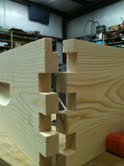
The frames are made in the USA as well and so is the foundation. The foundation is black plastic and coated with real bees wax. This is the best combination of frame and foundation that I have found. The bees seem to adopt it better than anything else I have used.
The tops this year are a migratory top or a California top. I have used both the telescopic cover and the California tops and I am converting to the California top as it is just easier to work with. You can also create a top entrance if you would like. It just seem a lot more versatile and you don't need an inner cover with it.
The bottoms are a solid reversable bottom. One side leaves a bee opening of 3/4 inch and the other side is 3/8 inch. The 3/8 inch is a good size for the winter and the 3/4 works good in the summer. These also come with an entrance reducer.
The kit also comes with a division feeder. This is a plastic feeder that replaces two frames and has a cap and ladder cover so you don't have as many bees drown. These feeders work really well and you can use them over and over.
Finally the kit comes with a 3lb package of bees. This is approximately 9,000 bees and one queen. You can choose from either a Carniolan queen or Cordovan Italian queen. Both breeds work really well in Utah. Here is a link to a prior post that explains the different breeds. These packages come from Koehnen & Sons in California and are good quality packages.
All of this for only $275. We will give you an introductory class when you pick up the bees and be a coach an mentor along the way. If you want two or more, we will offer a discount. The equipment comes unpainted. If you would like it stained it will be an additional $30.
Starter hives will be the same as above, but will only have 3 boxes instead of 5 and will be $215.
If you want hive components or bees here are the following prices:
Medium hive boxes (assembled with frames and foundation) - $35/box
Heavy duty California top - $12
Reversible bottom w/ entrance reducer - $12
Division feeder for 6 5/8 box - $10
3lb package of bees $82
Let me know if you have any questions. I would love to help you get started. 801-796-2114
Happy Beekeeping
Tuesday, January 8, 2013
Goals for 2013
I have thought a lot about this and there are so many things I want to try, but so little time to do it. After such a bad year for honey last year, I would like to really focus on honey production. We had 15 hives going into winter and many of them were pretty light. I would like to stay at about 15 hives, but really focus on building them up in the spring. If I have any that don't make it through the winter, I will replace them with packages. I will try not to split any hives in the spring unless they start to prepare to swarm. I will try to feed them pollen substitute to get them to build. I don't think I will feed them sugar water, even though most people recommend feeding the pollen with the sugar water. I am hoping they have enough honey and wont need the sugar water. I will pay close attention to the mite counts. Hopefully through these efforts I can have healthy bees going into the nectar flows. I am also hoping this year we wont have as dry of a year. I think that is what really killed me last year.
The second thing I would like to do is sell hives again this year. We had a lot of fun doing it last year. I found even better quality equipment and I think we can get people set up right. I didn't have a very good experience buying our first hive, so my goal is to make sure people feel like they are ready for bees and have someone that they can trust gave them the best shot at being successful. Goal is to sell 25 hives this year.
The third thing I would like to try is to over winter nucleus hives. It always seems like you have a couple of week hives in the bunch. I am thinking of splitting them up the end of June or first of July and getting them built up enough to get through winter. We will see how it goes. Winter is the most stressful time for me, because you cannot check you bees. You just hope they will make it through, so if I had some nucs make it I can cover any of my hive losses.
If I can do these things 2013 should be a great year. Happy beekeeping!
The second thing I would like to do is sell hives again this year. We had a lot of fun doing it last year. I found even better quality equipment and I think we can get people set up right. I didn't have a very good experience buying our first hive, so my goal is to make sure people feel like they are ready for bees and have someone that they can trust gave them the best shot at being successful. Goal is to sell 25 hives this year.
The third thing I would like to try is to over winter nucleus hives. It always seems like you have a couple of week hives in the bunch. I am thinking of splitting them up the end of June or first of July and getting them built up enough to get through winter. We will see how it goes. Winter is the most stressful time for me, because you cannot check you bees. You just hope they will make it through, so if I had some nucs make it I can cover any of my hive losses.
If I can do these things 2013 should be a great year. Happy beekeeping!
![]() |
| Cordovan Queen (one of my favorite breeds of queens) |
Thursday, January 3, 2013
2012 In Review
2012 was a great year for me, but not so much for the
bees. I first apologize for not keeping
the blog up as well as I should. My wife
had our third child and that made life crazy for us. I hope to do a lot better job this year.
It was a fun year, but tough one on the bees. I am anxious to see if we can get all 15 hives through the winter.
As I said it was a tough year for the bees. It was so dry that we really didn’t see any nectar
flows. We started about 5 nucs (small 5
frame hives) this year and put New World Carnolian queens in them. I was really excited to try these queens. One
trait of this breed is that it will slow down the brood rearing when there isn’t
nectar flows. Well unfortunately they
were all really slow to build up because we didn’t have any nectar flows. This is supposed to be a good trait to help
them get through the winter on less honey stores, but on such a dry summer I am
hoping they will have enough to get through the winter.
Honey production overall was a dismal. We got about 80 lbs off of 15 hives. I probably was a little aggressive in taking
the honey too, thinking they may have a fall flow. They didn’t, so we went into winter pretty lean.
Firsts for 2012:
·
Built from scratch 30 hives (I am not sure it is
worth doing from scratch)
·
Helped 10 people get started with beehives
·
Found 2 queens working in a hive
·
Saw a queen lay an egg while I was observing the
hive
·
Had to deal with mold in a hive
·
Purchased an extractor
·
Used a heat gun to remove the cappings
It was a fun year, but tough one on the bees. I am anxious to see if we can get all 15 hives through the winter.
Friday, March 30, 2012
Two More Weeks
The bees are about to arrive. We will be picking up 20 packages of bees on April 14th. It should be a lot of fun. I have spent the last two months building hives and now I am ready to focus on the bees. For those who are just getting started, now is the time you want to set up your hive. Pick a good sunny location. An ideal location would have the entrance facing South East so that the sun can wake the girls up early. A little afternoon shade isn't bad and some kind of shelter to protect them from the North wind in the winter is good too. If it were me I would lean towards too much sun vs. not enough. Set your hive on something so that it gets it off the ground and high enough to avoid vegetation blocking the entrance. You will want your site as level as you can get it. I then put a shim or two on the back so that it tilts slightly forward. This makes it so that if any water does get into the hive it will run out the entrance. Once you have your site located and prepared. I would put your hive in its place. You will start with the bottom board and then one box on top of that. You will want to put your feeder in, but I would not fill it up yet. If it is a division feeder, I like to remove 2 frames. I would wait to fill it on the day you get the bees, but good to have it all in place. You then will put the inner cover on and the top cover. Your hive is ready to go. You can put your entrance reducer on if you would like, you will want it on when you put the bees in.
Over the next two weeks you will want to make sure there is a water source for the bees. This can be a natural source or a man made one. You will want to make sure you have all your safety gear (suit, gloves, hive tool and smoker if you want). I would go to youtube and watch a few videos on how to install a package of bees. This will get you even more excited and when I show you on the 14th, it will look really familiar. The night before the bees arrive, it is a good idea to make up the sugar syrup. For spring feeding it is 2 parts water to 1 part sugar and I do it based on weight. In volume I think it is almost 1:1. You will want it room temperature when you feed it to your bees. On a new package of bees I like to feed them until they have the first two boxes filled up or until they don't take it any more. A lot of times there will be a natural nectar flow and the bees will prefer it over the sugar syrup. You are ready to become a beekeeper.
It is extremely good to read up on how to keep bees and youtube is a great resource as well. I will not be able to explain everything in the short time we will have on the 14th, but there are tons of resources and info that are available either in print or on the internet.
Beekeeping is a great hobby and you will love keeping bees!
Over the next two weeks you will want to make sure there is a water source for the bees. This can be a natural source or a man made one. You will want to make sure you have all your safety gear (suit, gloves, hive tool and smoker if you want). I would go to youtube and watch a few videos on how to install a package of bees. This will get you even more excited and when I show you on the 14th, it will look really familiar. The night before the bees arrive, it is a good idea to make up the sugar syrup. For spring feeding it is 2 parts water to 1 part sugar and I do it based on weight. In volume I think it is almost 1:1. You will want it room temperature when you feed it to your bees. On a new package of bees I like to feed them until they have the first two boxes filled up or until they don't take it any more. A lot of times there will be a natural nectar flow and the bees will prefer it over the sugar syrup. You are ready to become a beekeeper.
It is extremely good to read up on how to keep bees and youtube is a great resource as well. I will not be able to explain everything in the short time we will have on the 14th, but there are tons of resources and info that are available either in print or on the internet.
Beekeeping is a great hobby and you will love keeping bees!
Friday, March 9, 2012
First Year vs. Second Year Beehives
Looking at the next seven day forecast, we should have some great spring weather for the bees. I put a pollen patty on all of the hives last weekend and this should start the queen laying again or at least encourage her to increase her laying. We have had a few good days of weather lately and the trees are really starting to bud. You can see the aspens, some maples and willows starting to bud out. With good weather for the next few days the bees should be able to get out and we should see some pollen coming into the hives. This is always exciting because you know that they are replenishing some of the used stores they had from last year. They use the pollen for the brood and if you see lots of pollen coming it is a good indication there is a lot available and more importantly you probably have a queen and she is laying eggs.
The first year of a hive, all the resources are going into building up a hive. I heard yesterday that it takes 7 pounds of nectar to create one pound of wax (not sure how accurate that is) and when you start with new foundation the bees are going to be putting all the resources they can into building wax so the queen has a place to lay and the bees have a place to put nectar and pollen. You are also starting with a smaller bee count so they are focused on building up the population which is taking a lot of resources. Unfortunately the first year they typically build up slower and you don't get much honey if any.
The second year hive is really fun to see. Assuming they are coming out of winter healthy, they are going to start building up population about 6 weeks before new hives are being delivered and started. A second year hive will already have a place for the queen to lay so they don't have to focus on building wax. These hives should really build fast. The queen is still typically young enough that she is still close to her prime and boom the hive starts to explode in numbers. They do this so that they will have strong populations when the nectar flows start in the spring and then in the summer. You also have to be really careful that they don't get too big compared to their space. If they start to feel too crowded about the first of April through June they will swarm on you. It is a good thing to have a big healthy hive, but you don't want them swarming or else you loose that big population to gather nectar and pollen.
Things I will be looking for this week will be the amount of activity and pollen that is coming in. I would expect the pollen will be a white or gray color coming in and hopefully we will see quite a few of the bees coming in with it. I may take a look at a couple of the hives that I am worried about to make sure they have a queen and big enough food stores to get them through bad weather days. They also really don't have any nectar sources until trees start to flower. If they don't have much honey it is a good idea to feed them sugar water or some type of feed since they need a carbohydrate source. You also don't want to break up the cluster in a hive unless it is at least 60 degrees or so. We should hit that the next couple of days. I will let you know what I see.
The first year of a hive, all the resources are going into building up a hive. I heard yesterday that it takes 7 pounds of nectar to create one pound of wax (not sure how accurate that is) and when you start with new foundation the bees are going to be putting all the resources they can into building wax so the queen has a place to lay and the bees have a place to put nectar and pollen. You are also starting with a smaller bee count so they are focused on building up the population which is taking a lot of resources. Unfortunately the first year they typically build up slower and you don't get much honey if any.
The second year hive is really fun to see. Assuming they are coming out of winter healthy, they are going to start building up population about 6 weeks before new hives are being delivered and started. A second year hive will already have a place for the queen to lay so they don't have to focus on building wax. These hives should really build fast. The queen is still typically young enough that she is still close to her prime and boom the hive starts to explode in numbers. They do this so that they will have strong populations when the nectar flows start in the spring and then in the summer. You also have to be really careful that they don't get too big compared to their space. If they start to feel too crowded about the first of April through June they will swarm on you. It is a good thing to have a big healthy hive, but you don't want them swarming or else you loose that big population to gather nectar and pollen.
Things I will be looking for this week will be the amount of activity and pollen that is coming in. I would expect the pollen will be a white or gray color coming in and hopefully we will see quite a few of the bees coming in with it. I may take a look at a couple of the hives that I am worried about to make sure they have a queen and big enough food stores to get them through bad weather days. They also really don't have any nectar sources until trees start to flower. If they don't have much honey it is a good idea to feed them sugar water or some type of feed since they need a carbohydrate source. You also don't want to break up the cluster in a hive unless it is at least 60 degrees or so. We should hit that the next couple of days. I will let you know what I see.
Sunday, February 26, 2012
A Couple of Videos from Last Year.
I thought I would repost a couple of videos from last year. These were a lot of fun. It is fun to have the whole family involved. My Dad and I do most of the beekeeping duties, but my wife and girls enjoy watching us start new hives and harvest time. We aren't the best at making videos, but hopefully you can see how much fun this hobby is. The fist one is of us installing a package of bees.
This next video is of us installing a nucleus hive. The weather was really cool this year, so we had to get the nuc and package right into the hive as quickly as we could.
The final video was of us capturing a swarm. I didn't do a very good job of catching all the bees, but somehow I got lucky and got the queen. I left the box there over night and probably 95% of the bees found their way into the hive. This was a lot of fun. Bees are typically very gentle in a swarm because they don't have a lot to protect. They don't have brood or food storage to protect so they are really focused on finding a new home. This was a blast! Cannot wait for swarm season (as long as it isn't my hives).
This next video is of us installing a nucleus hive. The weather was really cool this year, so we had to get the nuc and package right into the hive as quickly as we could.
The final video was of us capturing a swarm. I didn't do a very good job of catching all the bees, but somehow I got lucky and got the queen. I left the box there over night and probably 95% of the bees found their way into the hive. This was a lot of fun. Bees are typically very gentle in a swarm because they don't have a lot to protect. They don't have brood or food storage to protect so they are really focused on finding a new home. This was a blast! Cannot wait for swarm season (as long as it isn't my hives).
Friday, February 24, 2012
I Spoke Too Soon!
Yesterday I thought I had sold out of hives. Well I had someone want to change his order and decrease it by one hive. That means it isn't too late to start beekeeping. The one that canceled was actually a nucleus hive. I wasn't going to sell these until next year, but this individual wanted three of them instead of the packages of bees. I can swap either one out of my hives so you can choose. A hive with the package of bees will be $300 (all the wooden ware and a 3# package of Italian bees) or the nucleus hive will be $350 (all the wooden ware, 5 frame nuc of bees, wooden nuc box, and a division feeder). Both types will have a Cordovan Italian Queen.
The difference between a package and a nucleus:
Let's start with the package. This is probably the most common way people get started. It is less expensive, you can get the bees a littler earlier, and if people plan to have them shipped this is the way to do it. I don't ship so the last point really isn't valid for people around here. Some disadvantages are sometimes they don't take to the new queen. A package is 3 pounds of bees shaken from different hives and placed with a foreign queen. Generally they do accept the queen as their own after a few days, but there is a risk. Some times the queens are not as prolific as you would like and get superseded in the same year. This will slow down the progress of the hive. A package of bees mimics a swarm, and the bees are generally in a hyper growth mode and will build out new foundations rather quickly. The downside is the bees only live about 6 weeks this time of year and the population will start to decrease until the first brood emerge around day 24 after the queen has been laying. At this point the population should start to really build. Here is a video of one way to install a package of bees. This is done by Chad Ragland from Apis hive and he does a really good job demonstrating it. Package Install
Nucleus hives, are in my opinion the safest way to start a hive. I will start with the negatives first because there aren't many. Nucleus hives cost a little more because you usually have more work invested in them from a suppliers standpoint. Their is a slightly higher chance of passing disease if the supplier isn't careful. Typically if the supplier uses newer foundation, pulls from a healthy hive, and breaks the brood cycle, you wont have to worry about most diseases and mites. The advantages of a nucleus are great. When you get a nucleus hive typically it is 4 to 5 frames and should be full of bees. You often have the opportunity to to inspect the nuc before taking it and make sure you approve of the brood pattern. When you get the bees they will be increasing rapidly because they will have all stages of brood. This tends to result in more honey that can be harvested in the first year. It is a little less intimidating for a new beekeeper because you don't have to pound and shake the bees out of the package, all you do is transfer the frames into your new hive. I do highly recommend nucs, but they do cost a little more. The success rate of a nuc is a lot higher because the supplier takes on the risk of making sure it is good and ready for sale. Here is a quick video of a common way to make nucs. Nuc video
A quick note on the Cordovan Italian queen. These queens are beautiful. All queens are pretty amazing, but the Cordovan queens do stand out when you see them. They are a very light golden color and often don't have any black strips. Their offspring often do have a little dark on them so the queen really stands out among her offspring. These queens are generally very prolific, gentle, good hygienic, and a good honey producers. This breed does very well in our climate.
Hope that helps. We are down to about 6 or 7 weeks until bees start coming.
The difference between a package and a nucleus:
Let's start with the package. This is probably the most common way people get started. It is less expensive, you can get the bees a littler earlier, and if people plan to have them shipped this is the way to do it. I don't ship so the last point really isn't valid for people around here. Some disadvantages are sometimes they don't take to the new queen. A package is 3 pounds of bees shaken from different hives and placed with a foreign queen. Generally they do accept the queen as their own after a few days, but there is a risk. Some times the queens are not as prolific as you would like and get superseded in the same year. This will slow down the progress of the hive. A package of bees mimics a swarm, and the bees are generally in a hyper growth mode and will build out new foundations rather quickly. The downside is the bees only live about 6 weeks this time of year and the population will start to decrease until the first brood emerge around day 24 after the queen has been laying. At this point the population should start to really build. Here is a video of one way to install a package of bees. This is done by Chad Ragland from Apis hive and he does a really good job demonstrating it. Package Install
Nucleus hives, are in my opinion the safest way to start a hive. I will start with the negatives first because there aren't many. Nucleus hives cost a little more because you usually have more work invested in them from a suppliers standpoint. Their is a slightly higher chance of passing disease if the supplier isn't careful. Typically if the supplier uses newer foundation, pulls from a healthy hive, and breaks the brood cycle, you wont have to worry about most diseases and mites. The advantages of a nucleus are great. When you get a nucleus hive typically it is 4 to 5 frames and should be full of bees. You often have the opportunity to to inspect the nuc before taking it and make sure you approve of the brood pattern. When you get the bees they will be increasing rapidly because they will have all stages of brood. This tends to result in more honey that can be harvested in the first year. It is a little less intimidating for a new beekeeper because you don't have to pound and shake the bees out of the package, all you do is transfer the frames into your new hive. I do highly recommend nucs, but they do cost a little more. The success rate of a nuc is a lot higher because the supplier takes on the risk of making sure it is good and ready for sale. Here is a quick video of a common way to make nucs. Nuc video
A quick note on the Cordovan Italian queen. These queens are beautiful. All queens are pretty amazing, but the Cordovan queens do stand out when you see them. They are a very light golden color and often don't have any black strips. Their offspring often do have a little dark on them so the queen really stands out among her offspring. These queens are generally very prolific, gentle, good hygienic, and a good honey producers. This breed does very well in our climate.
Hope that helps. We are down to about 6 or 7 weeks until bees start coming.
Wednesday, February 22, 2012
I am sold out!
This should be an exciting spring. I have started making all the boxes. I will be making about 105 boxes. I am going to really need to speed up the process I can tell already. I enjoy working with the wood though. We have 1,050 frames and foundation coming to us any day, so I am going to see if my Dad can help me assemble all of those. I have sold 10 hives and hopefully can increase my yards by 10 hives. That means we purchased 15 packages of bees. 12 will go straight into hives and 3 of them I will make nucleus hives out of. I will give them a couple of frames of built out foundation and maybe even a frame of bees to help boost their population. This should get them really going. It will be a busy Saturday, but should be a lot of fun. I am also scheduled to receive my queens on the 19 of April and so I will need to have made up my splits probably the Monday after I get all the packages. I cannot wait for April. We will need some good weather around the middle of April for me to be able to get it all done.
I checked the bees again this last Saturday. All the hives are still alive, but I am a little nervous for a couple of them. They just have pretty small clusters and hope they can make it through. I am hoping to make at least 6 splits and possibly 8 if I have strong enough hives. I will start feed them pollen sub patties probably in the next week or so. I already put one on my weakest hive and they have not even touched it. My guess is it is too cold for them and they don't want anything to do with it. I will keep you posted, but should be a busy, but fun next two months.
Thursday, February 9, 2012
Difference in Bee Breeds
I am by no means an expert on the different bee breeds, but I will share with you some information I have found and what I have found in my experience. I have found a pretty basic web page that does a pretty good job of explaining the bee breeds.
In my experience the two most common types are either Italian or Carniolan. You can also find a few other species of honey bee, but they are not as common in Utah. Then you have the Minnesota Hygenic or a VSH which I understand to be hybrids and not actual species of bees.
I will do my best to break down the difference between the Italian and Carniolan races. Italians are the lighter golden color and the Carniolan are typically darker and sometimes even black.
Some pros and cons for the Italian race:
Pros - They are very gentle, builds up good in the spring, good honey producers and overwinters well .
Cons - They usually have large colonies even when there is low honey flow requiring more honey during the winter. I have found they tend to have more mites than the Carniolans. They tend to drift and rob.
Pros and Cons for the Carniolan:
Pros - They are very gentle, rapid spring build up, queen will slow down the laying in times of nectar dearths, overwinters in smaller populations, seems to be more resistant to diseases and mites, tends to forage in cooler weather, and good honey producer.
Cons - Because they build up so quickly in the spring they have a tendency to swarm, my experience is they tend to have more propolis.
I tend to favor the Carniolans, but I enjoy having the Italians as well. Hopefully this helps in trying to determine what queen to select.
In my experience the two most common types are either Italian or Carniolan. You can also find a few other species of honey bee, but they are not as common in Utah. Then you have the Minnesota Hygenic or a VSH which I understand to be hybrids and not actual species of bees.
I will do my best to break down the difference between the Italian and Carniolan races. Italians are the lighter golden color and the Carniolan are typically darker and sometimes even black.
Some pros and cons for the Italian race:
Pros - They are very gentle, builds up good in the spring, good honey producers and overwinters well .
Cons - They usually have large colonies even when there is low honey flow requiring more honey during the winter. I have found they tend to have more mites than the Carniolans. They tend to drift and rob.
Pros and Cons for the Carniolan:
Pros - They are very gentle, rapid spring build up, queen will slow down the laying in times of nectar dearths, overwinters in smaller populations, seems to be more resistant to diseases and mites, tends to forage in cooler weather, and good honey producer.
Cons - Because they build up so quickly in the spring they have a tendency to swarm, my experience is they tend to have more propolis.
I tend to favor the Carniolans, but I enjoy having the Italians as well. Hopefully this helps in trying to determine what queen to select.
Monday, February 6, 2012
Basic Starter Kit, Complete Hive Kits, and Hive Componants for Sale
I am going to be selling some equipment. I have decided to make most of the wooden ware. It will be standard 10 frame wooden ware, but I plan to make some improvements to the top box joint that tends to be the weakest part of the box since it is also rabbit jointed. All lumber will be commercial grade lumber and will be assembled with weather resistant glue and galvanized nails. The bottom boards will be made with 3/4 inch solid exterior plywood that can be reversible for winter and summer entrances. The inner covers will be made with 3/8 inch exterior plywood that will be very durable and shouldn't warp or twist from the moisture in the hive. Many inner covers are made of 1/4 inch Masonite that will warp as it is exposed to moisture from the hive. The telescopic covers are very attractive and actually provide better ventilation than the California tops or migratory tops. They will last a long time as the top is covered with galvanized steal. These will be some of the best built hives you can buy. I am not painting the hives, so that the buyer can decide on color and whether to paint or stain. I prefer to stain.
I am also selling kits that will include a package of bees. I have done a lot of research and have found a couple of package providers that consistently have good reviews. I have used CF Koehnen packages and queens and have had good success with both. I have decided to stick with them. You can choose between Italian and Carniolan queens. There are pros and cons to both breeds, but it would probably take too long to explain them in this blog entry.
Pricing:
$300 - Complete hive with a 3# package of bees. For the hives you can choose from either 2 deep boxes and 2 medium supers or 5 medium super kits. All boxes will include wooden frames and molded plastic foundation dipped in 100% beeswax. Kits will also include a reversible bottom board, entrance reducer, inner cover, and deluxe telescopic cover all as explained above.
$220 - Basic starter kit with 3# package of bees. If you just want to get started this kit is for you. You can choose from 2 deep boxes or 3 medium supers. Again boxes will include wooden frames and molded plastic foundation dipped in 100% beeswax. Kits will also include a reversible bottom board, entrance reducer, inner cover, and deluxe telescopic cover all as explained above.
If you just want to buy components the pricing is as follows:
If you have any questions give me a call 801-830-1168. I am currently not shipping, but will be happy to arrange a time for pick up or I can deliver to Utah County.
I am also selling kits that will include a package of bees. I have done a lot of research and have found a couple of package providers that consistently have good reviews. I have used CF Koehnen packages and queens and have had good success with both. I have decided to stick with them. You can choose between Italian and Carniolan queens. There are pros and cons to both breeds, but it would probably take too long to explain them in this blog entry.
Pricing:
$300 - Complete hive with a 3# package of bees. For the hives you can choose from either 2 deep boxes and 2 medium supers or 5 medium super kits. All boxes will include wooden frames and molded plastic foundation dipped in 100% beeswax. Kits will also include a reversible bottom board, entrance reducer, inner cover, and deluxe telescopic cover all as explained above.
$220 - Basic starter kit with 3# package of bees. If you just want to get started this kit is for you. You can choose from 2 deep boxes or 3 medium supers. Again boxes will include wooden frames and molded plastic foundation dipped in 100% beeswax. Kits will also include a reversible bottom board, entrance reducer, inner cover, and deluxe telescopic cover all as explained above.
If you just want to buy components the pricing is as follows:
· Reversible bottom board - $10
· Deluxe Telescopic Cover w/ Inner cover - $30
· Deep box w/ frames and foundation - $55
· Medium box w/ frames and foundation - $45
If you have any questions give me a call 801-830-1168. I am currently not shipping, but will be happy to arrange a time for pick up or I can deliver to Utah County.
Subscribe to:
Posts (Atom)